


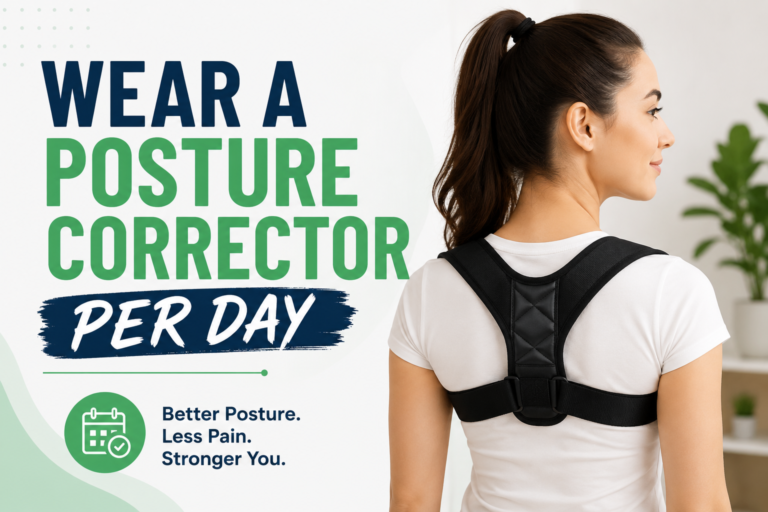

If you’ve just purchased a posture corrector or are considering getting one, you’re probably wondering: how many hours per day should I actually wear it? Wear it too little and you won’t see results. Wear it too much and you risk muscle dependency and discomfort.
The optimal duration is 1-3 hours per day for most people. This timeframe provides enough support to retrain your muscle memory without causing your muscles to become reliant on the device. However, the exact duration depends on your fitness level, posture severity, and how long you’ve been using the corrector.
Let’s break down the science-backed guidelines so you can maximize results while avoiding common mistakes.
The Golden Rule: Start Short, Build Gradually
Your body needs time to adapt to a posture corrector. Jumping straight into 4-hour sessions can cause muscle soreness, skin irritation, and frustration that leads to abandoning the device altogether.
Week 1: 15-30 Minutes Daily
Start with just 15-30 minutes per day during your first week. This acclimation period allows your muscles to adjust to the new positioning without overwhelming them.
Best practices for week 1:
-
Wear during low-intensity activities (watching TV, reading, light computer work)
-
Remove immediately if you experience pain (mild discomfort is normal, sharp pain is not)
-
Try wearing at different times of day to find what feels best
-
Focus on how the corrector feels—it should pull shoulders back gently, not painfully
Week 2-3: 30-60 Minutes Daily
Once your body adapts, increase wear time to 30-60 minutes daily. By now, you should notice improved postural awareness even when you’re not wearing the device.
Progressive strategies:
-
Extend wear time by 10-15 minutes every few days
-
Start using during moderate activities (desk work, cooking, casual walking)
-
Pay attention to your posture when you remove the corrector—are you more conscious of slouching?
Week 4 and Beyond: 1-3 Hours Daily (Maintenance Phase)
After three to four weeks, you can settle into the optimal maintenance duration of 1-3 hours per day. At this stage, you’re using the corrector strategically during activities that tend to worsen your posture.
How Long Is Too Long? The Risks of Overuse
While it might seem logical that wearing a posture corrector all day would speed up results, the opposite is true. Wearing a posture corrector for more than 4 hours per day can actually weaken your muscles.
Here’s why:
Muscle atrophy risk. Your back and core muscles need to work independently to build strength. If you constantly rely on external support, these muscles become lazy and weaken over time. This creates a dependency cycle where you need the corrector more, not less.
Restricted movement. Prolonged wear limits your natural range of motion, which can cause stiffness and reduce flexibility in your shoulders and upper back.
Skin irritation and discomfort. Extended wear increases friction against your skin, leading to chafing, rashes, and pressure points—especially in hot weather or during physical activity.
Diminished awareness. The goal of a posture corrector is to build conscious awareness of your posture. If you wear it all the time, you stop actively thinking about your positioning, defeating the purpose.
Ideal Times to Wear Your Posture Corrector
Strategic timing maximizes effectiveness. Wear your posture corrector during activities that typically cause poor posture:
1. During Desk Work or Computer Use
This is when most people slouch the most. Wear your corrector for 1-2 hours during your workday when you’re most prone to forward head posture and rounded shoulders.
Pro tip: Set a timer for your wear session, then remove the corrector and do 5 minutes of stretching and strengthening exercises.
2. While Using Your Phone or Tablet
“Tech neck” from looking down at devices is a major posture problem. Wear your corrector during extended phone sessions to counteract this forward head position.
3. During Low-Impact Activities
Watching TV, reading, or doing household tasks are perfect times to wear your corrector. You’re stationary enough that it provides support, but not so active that it restricts movement.
When NOT to Wear a Posture Corrector
Avoid wearing your corrector during:
-
Sleep – Your body needs unrestricted movement during rest
-
Exercise or workouts – It restricts your range of motion and prevents muscles from strengthening naturally
-
High-intensity activities – Running, sports, or heavy lifting require full mobility
-
Showering or swimming – Most correctors aren’t waterproof and moisture causes skin issues
How to Know If You’re Wearing It Enough (or Too Much)
Pay attention to these signs to gauge whether your usage is on track:
✅ Signs You’re Using It Correctly
-
Mild muscle soreness in your back and shoulders (means muscles are activating)
-
Increased awareness of slouching when the corrector is off
-
Gradual improvement in resting posture over 2-4 weeks
-
Comfortable to wear for your target duration without pain
-
You can maintain good posture for longer periods without the device
❌ Signs You’re Overusing It
-
Muscle weakness or fatigue when the corrector is off
-
Increased dependence—you feel like you can’t maintain posture without it
-
Skin irritation, rashes, or pressure sores
-
Stiffness or reduced shoulder mobility
-
No improvement in posture awareness after 4+ weeks
Duration Guidelines by Experience Level
Your ideal wear time also depends on your current fitness and posture condition:
For Beginners (Mild Posture Issues)
Recommended duration: 30-60 minutes daily for 4-6 weeks
If you have minor forward head posture or slight slouching from desk work, shorter sessions combined with strengthening exercises will yield results quickly.
For Intermediate Users (Moderate Posture Problems)
Recommended duration: 1-2 hours daily for 6-8 weeks
If you have more pronounced rounded shoulders, upper back pain, or “text neck,” you’ll benefit from slightly longer sessions. Focus on wearing during your highest-risk activities.
For Advanced Users (Long-Term Maintenance)
Recommended duration: 1-3 hours daily, 3-4 times per week
Once you’ve built good postural habits, you can reduce frequency. Use your corrector as a maintenance tool during long work sessions or when you notice your posture slipping.
Combine Wear Time with These Exercises for Faster Results
A posture corrector works best when paired with exercises that strengthen the muscles responsible for good posture. Spend 10-15 minutes daily on these movements:
Upper back strengtheners:
-
Rows (resistance bands or dumbbells)
-
Reverse flies
-
Face pulls
-
Scapular squeezes (hold for 5 seconds, repeat 10 times)
Core stability:
-
Planks (30-60 seconds)
-
Bird dogs
-
Dead bugs
Neck and shoulder mobility:
-
Chin tucks (10 reps, 3 times daily)
-
Wall angels (10 reps)
-
Doorway chest stretches (hold 30 seconds each side)
The rule: For every hour you wear your posture corrector, spend 10 minutes doing strengthening exercises. This builds the internal support system you need for long-term posture improvement.
Creating Your Personal Posture Correction Schedule
Here’s a sample 6-week plan to follow:
Weeks 1-2: Foundation Phase
-
Wear time: 15-30 minutes daily
-
Timing: During TV time or light reading
-
Exercise: 5 minutes of chin tucks and shoulder squeezes daily
Weeks 3-4: Building Phase
-
Wear time: 45-60 minutes daily
-
Timing: During first hour of desk work
-
Exercise: 10 minutes of rows, planks, and stretches daily
Weeks 5-6: Integration Phase
-
Wear time: 1-2 hours daily
-
Timing: Split between desk work and evening activities
-
Exercise: 15 minutes of full posture workout 5 days per week
Weeks 7+: Maintenance Phase
-
Wear time: 1-3 hours, 4-5 days per week
-
Timing: As-needed during long work sessions
-
Exercise: Continue strength training to maintain gains
Choosing the Right Posture Corrector Matters
The quality and fit of your posture corrector directly impact how long you can comfortably wear it. Look for these features:
-
Adjustable straps that let you customize tension (start loose, tighten gradually)
-
Breathable, moisture-wicking materials to prevent sweating and irritation
-
Padded shoulder straps for extended comfort
-
Low-profile design that’s discreet under clothing
-
Strong but flexible support that allows some natural movement
If you’re looking for a high-quality option designed for daily wear, check out this Adjustable Posture Corrector Back Support Belt that works for both men and women. Its adjustable design makes it easy to follow the gradual progression plan outlined above.
Common Mistakes That Sabotage Results
Avoid these errors that prevent people from seeing improvements:
1. Wearing it inconsistently
Wearing for 3 hours one day, then skipping three days won’t build muscle memory. Consistency is more important than duration—30 minutes every single day beats 2 hours twice a week.
2. Cranking it too tight
A tighter corrector doesn’t mean faster results. It should provide gentle, firm support—not cut off circulation or cause pain.
3. Skipping the exercises
A corrector provides external support; exercises build internal strength. You need both.
4. Expecting instant results
Most people notice meaningful improvements after 3-4 weeks of consistent use. Give it time.
5. Never weaning off
The goal is to eventually need the corrector less, not more. After 6-8 weeks, start reducing wear time to test whether your posture holds without it.
The Bottom Line: Duration Matters, But So Does Consistency
How long should you wear a posture corrector per day? Start with 15-30 minutes daily for the first week, gradually increase to 1-3 hours per day by week 4, and maintain that duration for 6-8 weeks. Always combine wear time with strengthening exercises, and never exceed 4 hours daily to avoid muscle dependency.
The key to success isn’t just duration—it’s consistency, progressive overload, and pairing the device with exercises that address the root cause of poor posture. Treat your posture corrector as a training tool, not a permanent crutch, and you’ll build the strength and awareness needed for lasting improvement.
Ready to Start Your Posture Correction Journey?
If you don’t already have a quality posture corrector, consider investing in one that’s designed for comfort during extended wear. The Adjustable Posture Corrector Back Support Belt offers the adjustability and comfort you need to follow these guidelines effectively.
Remember: your posture didn’t deteriorate overnight, and it won’t improve overnight either. Commit to the process, follow the duration guidelines, and you’ll stand taller and feel better within weeks.
Disclaimer: This article provides general guidance and is not a substitute for professional medical advice. If you have chronic back pain, spinal conditions, or injuries, consult a healthcare provider or physical therapist before using a posture corrector.




0 Comments