



Hydration Hacks for 41-50 Year Olds in France: The Ultimate Guide to Staying Energized & Healthy
Hydration isn’t just about quenching thirst—especially as you enter your forties and fifties. In France, where lifestyle, cuisine, and traditions matter, staying hydrated in this age group can help you maintain energy, focus, metabolism, and even prevent age-related health issues. This comprehensive guide reveals practical hydration strategies tailored to mature adults, backed by science and French culture. Ready to make hydration your effortless health ally?
Why Hydration is Crucial for 41-50 Year Olds
As you age, your body’s ability to regulate water balance gradually declines. Decreased thirst sensation, changes in kidney function, and increased medication use make dehydration more common after 40.
Benefits of staying hydrated:
- Boosts brain function and mental clarity
- Improves digestion and prevents constipation—a frequent complaint in middle age
- Keeps your joints lubricated and your skin looking younger
- Supports kidney health and helps regulate blood pressure
- Enhances energy, mood, and metabolic rate
For more aging and wellness tips, see this preventive wellness guide.
How Much Water Should 41-50 Year Olds Drink in France?
The European Food Safety Authority recommends men aged 41-50 consume around 2.5 liters of water per day, and women about 2.0 liters—including fluids in foods. However, needs vary based on activity, climate, medication, and diet.
Factors Influencing Hydration Needs
- Warmer French summer months increase water loss—aim for more fluid on hot days.
- Coffee, wine, and tea are diuretics—balance them with extra water.
- Physical activity increases sweat, especially with regular walks, gardening, or cycling.
- Health conditions like diabetes, kidney issues, or diuretic medicines require extra attention.
Top 10 Hydration Hacks for French Adults Aged 41-50
- Start Your Day with a Glass of Water
Before your morning coffee or petit déjeuner, drink a large glass of room-temperature water to wake up your metabolism. - Infuse with French Flair
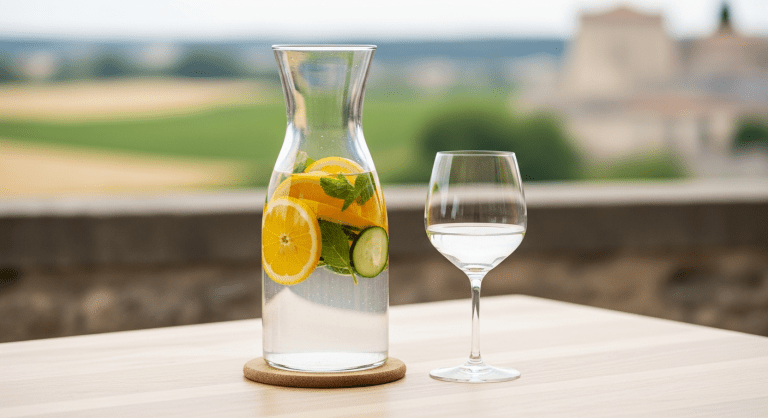
Add slices of cucumber, lemon, mint, or berries to your water for taste—making it more appealing and rich in antioxidants. - Follow the “Half Hour Rule”
Drink a glass of water 30 minutes before meals to aid digestion and avoid overeating. - Choose Water at Restaurants
Order “carafe d’eau” (tap water) with every meal to ensure consistent intake and save on calories and cost. - Monitor Urine Color
Pale yellow indicates good hydration; dark yellow means you likely need to drink more. - Eat Water-Rich Foods
Incorporate salads, soup, melon, tomatoes, and citrus into meals; these classic French foods are loaded with fluids. - Carry a Stylish Water Bottle
Keep a reusable water bottle in your bag or car—make it a daily accessory, not an afterthought. - Set Smart Reminders
Use your phone, fitness tracker, or a French hydration app (like Daily Water) for regular sips. - Balance Alcohol with Water
For every glass of wine or apéritif, drink a glass of sparkling or still water to prevent dehydration. - Make Hydration Social
Share your hydration goals with family or friends—encourage each other, especially in the warm French seasons.
Common Mistakes in Hydration—And How to Fix Them
- Mistake: Waiting until you are thirsty.
Fix: Thirst is a late dehydration signal after 40. Sip water throughout the day. - Mistake: Counting only water, not fluids from food.
Fix: Include herbal teas, broth, and hydrating foods in your tally. - Mistake: Overdoing it in one go.
Fix: Spread your fluid intake evenly for best absorption and to avoid stress on kidneys.
Best Drinks for Hydration: What Works (and What to Limit)
- Excellent choices: Water (still or sparkling), herbal tea, diluted fruit juice, and coconut water.
- Good choices in moderation: Non-caffeinated infusions, milk, vegetable juice.
- Limit: Coffee, black tea, sugary sodas, energy drinks, and more than 1-2 alcoholic drinks per day.
For more on natural wellness choices, see this guide to gut health.
Expert-Backed Hydration Tips for Mature French Adults
- Set rituals—drink before walks, after coming home, and before bed.
- Flavor with French herbs—try tarragon, rosemary, or basil for a refreshing twist.
- Choose low-sodium sparkling water (Perrier, Evian, Volvic) for variety and minerals.
- Santé publique France recommends watching for early dehydration signs (fatigue, headache, dry mouth).
- Pair hydration with healthy habits like balanced movement and nutrition.
Hydration and French Lifestyle: Making It Effortless
At Work
- Keep a glass of water at your desk.
- Get up every hour for a stretch and a few sips of water.
During Meals
- Experiment with chilled herb-infused waters with lunch or dinner.
- Enjoy French soups (bouillon, gazpacho) as a starter for hydration and nutrients.
Seasonal Tips
- Drink more when it’s hot, in the mountains, or during heat waves, as common in summer or southern France.
- Shift to warm hydration (herbal teas, light broths) in winter for comfort and warmth.
Signs You’re Not Drinking Enough (And What To Do)
- Frequent headaches
- Fatigue, trouble concentrating
- Dry or flaky skin
- Dark urine, constipation
- Muscle cramps, dizziness
If you have any health condition or are on medication, especially diuretics or blood pressure drugs, consult your doctor for personalized hydration recommendations. Read more about hydration and health.
FAQs: Hydration for 41-50 Year Olds in France
1. Is coffee or tea hydrating or dehydrating?
Coffee and tea in moderate amounts (2–3 cups per day) can contribute to hydration, but too much caffeine can be dehydrating. Balance with water.
2. Are sparkling waters healthy for daily hydration?
Yes, as long as they are low in sodium and unsweetened. Sparkling water can make hydration more interesting—just watch out for flavored versions with added sugar.
3. What counts as fluid intake?
Water, herbal teas, milk, soups, and most beverages count towards your daily intake. Foods like fruit, vegetables, and yogurt also add water.
4. How can I remember to drink enough during busy days?
Set phone alarms, keep water visible, and link drinking to routines like before/after meals and upon arriving home.
5. How do I know if I’m hydrated properly?
Pale yellow urine, steady energy, and few headaches are good signals. Dehydration shows as dark urine, fatigue, and headaches.
6. Are there risks to over-hydration?
Yes, though rare. Drinking excessive water very quickly can dilute blood minerals. Spread intake throughout the day, and never force yourself to drink when not thirsty—unless medically advised.
Conclusion: Make Hydration Your Healthy Routine in Your Forties
Hydration is a powerful, simple way for adults aged 41-50 in France to support energy, focus, joint health, and healthy aging. With these hacks, you can turn water into a daily habit instead of a chore.
Focus on steady, enjoyable sipping throughout the day, use foods, try creative infusions, and listen to your body’s signs. For more wellness and self-improvement strategies, check out:
- Cognitive biohacking for sharper focus
- Longevity wellness strategies
- Natural gut health optimization
Stay hydrated, stay vibrant—Vive la santé!




0 Comments