



India-US Trade Deal 2026: Clarifying the Truth Behind Trump’s Claims on Russian Oil and Tariffs
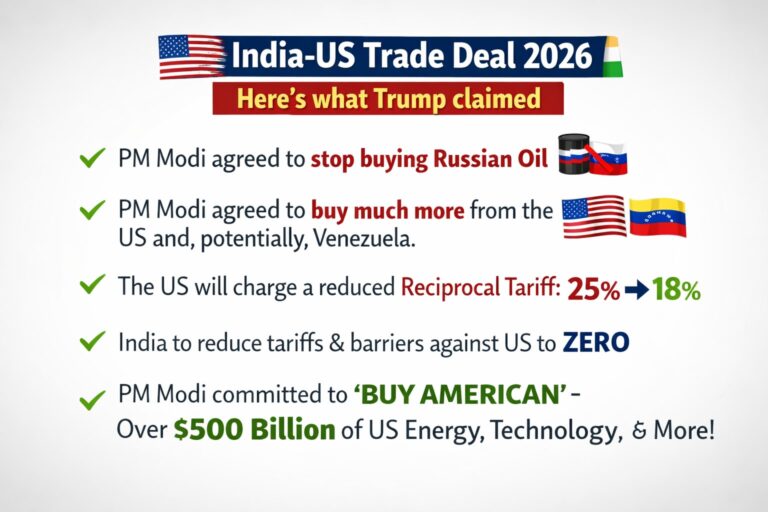
In recent developments surrounding the India-US trade agreement announced in early 2026, there has been significant confusion fueled by conflicting reports. Former President Donald Trump claimed that India agreed to halt Russian oil imports and committed to purchasing $500 billion worth of US goods, while Indian officials, notably Prime Minister Narendra Modi, only confirmed tariff reductions. This article provides a comprehensive, evidence-based analysis of what is actually known about the deal, addressing the key questions and clarifying the discrepancies.
Understanding the India-US Trade Deal of 2026
The trade deal announced on February 2, 2026, has garnered global attention due to its potential economic implications. At its core, the agreement involved significant reductions in tariffs, particularly a drop from 50% to 18% on certain Indian exports to the US. However, claims about broader commitments—such as stopping Russian oil imports or purchasing a set amount of US goods—have sparked debate among analysts, policymakers, and the public.
What Does the Deal Actually Include?
Tariff Reductions
According to official statements, the primary substance of the deal involved the United States reducing tariffs on Indian goods from 50% to 18%. This is a substantial decrease that could facilitate increased trade and economic cooperation between the two nations. Tariff adjustments like these are common in trade agreements aiming to bolster bilateral economic ties.
Indian Response and Official Position
Prime Minister Narendra Modi’s official statement did not mention halting Russian oil imports or agreeing to purchase $500 billion worth of US goods. Instead, Modi focused on the tariff reduction and broader cooperation initiatives. This indicates that some of Trump’s claims may not be fully aligned with the official commitments made by India.
Dissecting Trump’s Claims: Fact vs. Fiction
Trump’s assertions—that India agreed to stop buying Russian oil and to purchase a massive volume of US exports—are not substantiated by Indian government sources. Expert analysis suggests that these claims are likely exaggerations or misrepresentations aimed at framing the deal as a major victory for the US.
Why the Discrepancy?
- Official Statements vs. Public Claims: India’s official communications emphasize tariff reduction, not energy imports or specific purchase targets.
- Possible Political Messaging: Trump’s claims could be part of a political strategy to highlight US gains and India’s purported concessions.
- Complexity of International Negotiations: Trade deals often involve multiple negotiations where not all aspects are publicly detailed simultaneously.
Implications of the Deal and Ongoing Negotiations
The deal signals a potential shift toward warmer economic ties, but the lack of explicit commitments on oil imports and large-scale US goods purchases indicates that both parties remain cautious. Analysts suggest that full details may be negotiated in the coming months, with certain conditions still under discussion.
Key Takeaways
- The primary achievement of the 2026 deal is the reduction of US tariffs on Indian exports from 50% to 18%.
- Claims about India halting Russian oil imports and promising to buy $500 billion in US goods lack official confirmation.
- Discrepancies between public statements and alleged commitments highlight the complexity of international trade negotiations.
- Stakeholders should monitor official releases and expert analyses for accurate information moving forward.
Frequently Asked Questions (FAQs)
1. Did India agree to stop buying Russian oil in 2026?
No, there is no official confirmation from Indian authorities that they agreed to cease Russian oil imports. The focus has been on tariff reductions and broader economic cooperation.
2. What are the main benefits of the trade deal for India and the US?
The deal primarily benefits India through reduced tariffs, which can boost exports. For the US, it opens increased market access. The specifics depend on future negotiations and implementations.
3. Are Trump’s claims about the trade deal accurate?
Many claims—such as halting Russian oil imports and purchasing $500 billion in US goods—are not substantiated by official Indian sources and likely represent exaggerated or political narratives.
4. Could the deal evolve further?
Yes, international trade agreements often undergo subsequent negotiations. Both nations may expand or clarify commitments in the coming months.
5. How should investors and businesses interpret this deal?
They should watch for official updates, as reductions in tariffs present immediate opportunities, while broader commitments will depend on future negotiations.
Conclusion: What Does the Future Hold?
The India-US trade deal of 2026 marks a significant step toward closer economic engagement, highlighted by tariff reductions. However, claims about stopping Russian oil imports and large US exports commitments are unconfirmed by Indian authorities. Stakeholders should approach such statements with cautious skepticism and rely on official sources for accurate information.
Remaining alert to evolving negotiations and official announcements will be crucial in understanding the full scope of the agreement. For now, the deal signifies a promising foundation for future cooperation, albeit with some clarifications needed.
To stay updated on international trade developments, explore our expert insights on global economic trends and strategies for navigating international negotiations.




0 Comments