


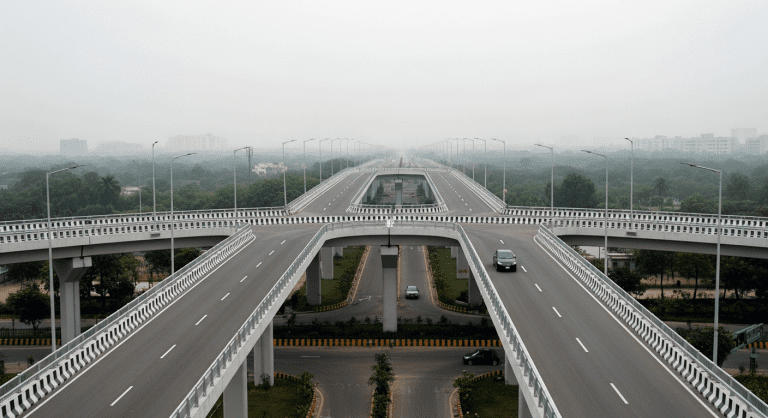

Delhi South Flyovers Approval: ₹759 Crore Infrastructure Projects to Decongest Traffic & Prevent Waterlogging
The Delhi government has recently approved a major ₹759 crore infrastructure boost targeting traffic congestion and monsoon waterlogging in South Delhi. This development brings hope for thousands of daily commuters in key areas like Greater Kailash, Nehru Place, Kalkaji, and the IIT region. The projects include doubling two crucial flyovers and constructing an extensive stormwater drain along the Mehrauli-Badarpur (MB) Road. Below, we dive into the full details, timelines, and impacts of these newly sanctioned works, answering all your pressing queries.
Overview of South Delhi Flyovers and Drain Projects
On a recent Tuesday, the Expenditure Finance Committee (EFC) cleared three long-pending infrastructure projects. These will be executed by the Public Works Department (PWD) to tackle chronic traffic jams and water-logging issues that have plagued South Delhi for years.
Details of Approved Projects
- Modi Mill Flyover Doubling: Construction of a new three-lane Modi Mill flyover extending 1,140 meters (from Kalkaji Mandir to Modi Mill) plus another 870 meters opposite side, at a cost of ₹312.94 crore.
- Savitri Cinema Flyover Doubling: Addition of a 435-meter three-lane half flyover parallel to the existing one, costing ₹58 crore.
- Stormwater Drain on MB Road: A major 11.38 km-long stormwater drain with 22.76 km of precast RCC box drains, from Lado Sarai T-point to Pul Prahladpur, designed to fix drainage gaps, metro damage, and undersized drains as per Delhi’s Drainage Master Plan, budgeted at ₹387.84 crore.
Total cost of flyover expansions: ₹371.75 crore.
Combined focus: These flyovers will create a seamless three-lane corridor from Modi Mill to IIT Gate, enabling signal-free vehicle flow and drastically reducing congestion. The flood mitigation project will ensure effective water drainage during monsoon, preventing waterlogging on key commuting routes.
Project Timelines and Implementation
The projects are expected to be completed in the following timeframe:
- Flyovers: 30 months
- Stormwater Drain: 2.5 years
Though tendering will begin after final financial approvals, the emphasis by PWD Minister Parvesh Verma is clear: no more delays, strict quality control, and integrated planning for lasting relief instead of temporary patches.
Why These Projects Are Crucial for South Delhi Commuters
Areas affected by gridlocks such as Outer Ring Road, Captain Gaur Marg, GK-II Road, and the Greater Kailash-Nehru Place corridor suffer daily traffic snarls and flooding woes during monsoon. This has long frustrated thousands of commuters and residents alike.
Benefits expected include:
- Signal-free traffic from Modi Mill to IIT Gate, easing peak hour congestion
- Enhanced stormwater drainage minimizing waterlogging and road closures during rains
- Improved road safety and commuter convenience in heavily populated zones
- Boost to local economy by smoother transport and reduced travel times
Addressing Years of Delay and Urban Growth Pressure
These projects were long pending due to indecision and coordination challenges. Now, amid rapid urbanization, the Delhi government aims to proactively meet infrastructure demands with these approvals.
Parvesh Verma highlighted the need for accountable execution to end the perpetual cycle of temporary fixes and deliver durable infrastructure solutions.
Frequently Asked Questions (FAQs)
What are the main projects approved for South Delhi traffic and drainage?
The government approved the doubling of Modi Mill and Savitri Cinema flyovers plus a major 11.38 km stormwater drain along MB Road to ease traffic and prevent waterlogging.
How much is the entire project costing?
The total project cost exceeds ₹759 crore, with ₹371.75 crore on flyover expansions and roughly ₹387.84 crore on stormwater drainage.
Who is responsible for implementing these projects?
The Public Works Department (PWD) will execute the projects, following clearances from the Expenditure Finance Committee.
When will the projects start and complete?
Tendering will start post final financial clearance. Flyovers are targeted for completion within 30 months, and the stormwater drain within 2.5 years.
What areas will benefit the most from these projects?
Key beneficiary areas include Greater Kailash, Kalkaji, Nehru Place, and IIT regions—high-density commuter zones marked by frequent traffic jams and flood issues.
How These Projects Outperform Existing Infrastructure Upgrades
Compared to previous patchwork solutions, these projects adopt a comprehensive approach:
- Integrated planning ensures all missing drainage links and road bottlenecks are addressed
- Precast RCC drains improve durability and reduce construction time
- Flyovers designed for three-lane, signal-free corridors optimize traffic flow
- Long-term maintenance and quality standards promise resilience against future urban growth pressures
Additional Considerations for Commuters & Planners
While the projects promise large-scale improvements, commuters should:
- Stay updated on tendering and construction timelines for alternate route planning during construction
- Support governmental efforts by reporting road hazards and drainage issues actively
Urban planners and engineers can learn from this project’s integrated design approach for future metropolitan infrastructure upgrades.
Conclusion: Long-Awaited Relief for South Delhi’s Traffic & Flood Troubles
The Delhi government’s approval of the ₹759 crore South Delhi flyovers and drainage projects marks a crucial step towards resolving chronic commuter frustrations. With careful planning, strong leadership from PWD Minister Parvesh Verma, and execution focus, residents can anticipate smoother traffic flow and reduced monsoon waterlogging within the next 2-3 years.
These improvements are not just infrastructure upgrades but transformative changes for daily life, safety, and urban resilience in South Delhi’s busiest corridors.
Actionable Takeaways for Delhi Residents & Commuters
- Follow official PWD and Delhi government updates to track project progress.
- Plan alternate routes temporarily during flyover and drainage construction phases.
- Report any ongoing waterlogging or traffic bottlenecks to local authorities for quicker remediation.
- Support clean and responsible urban practices to complement infrastructure efforts.
For further reading on Delhi’s infrastructure and urban development, visit this detailed report.




0 Comments