



Ultimate Guide to Travel Photography in Iceland: Capture Your Adventure Like a Pro
If you’re planning a trip to Iceland, you’re in for one of the most breathtaking landscapes on Earth. But to truly preserve the majesty of glaciers, waterfalls, and volcanoes, mastering travel photography is essential. Whether you’re a newbie or an aspiring professional, this guide will help you capture stunning images that do justice to Iceland’s natural wonders.
Why Iceland is a Photographer’s Paradise
Iceland’s diverse landscapes—glaciers, black sand beaches, geothermal hotspots—offer endless opportunities for compelling photos. Its unique light conditions, especially during the golden hour, create magical effects. Learning how to optimize your camera settings and composition will maximize your photo quality and help you stand out on platforms like Instagram or travel blogs.
Essential Travel Photography Tips for Iceland
1. Use the Right Equipment
- Camera: A DSLR or mirrorless camera with manual controls provides flexibility.
- Lenses: Wide-angle lens for landscapes, telephoto for distant features, and a macro for details.
- Tripod: Essential for long exposures—especially at waterfalls or during low light.
- Filters: Polarizing filter reduces glare and enhances colors; ND filters are great for long exposures.
2. Master Camera Settings for Iceland’s Unique Light
Adjust aperture, ISO, and shutter speed according to conditions:
| Scenario | Recommended Settings | Notes |
|---|---|---|
| Bright daylight | Small aperture (f/8–f/11), low ISO (100–200), fast shutter | Capture sharp landscapes with minimal noise |
| Golden hour / sunrise or sunset | Wide aperture (f/2.8–f/4), ISO 100, slow shutter speed | Enhance warm tones and dynamic range |
| Night or aurora borealis | Wide aperture, ISO 1600–3200, long exposure (10–30 sec) | Use tripod to avoid blur |
3. Composition Techniques for Stunning Shots
- Leading Lines: Rivers, roads, or mountain ridges guide viewers through the scene.
- Rule of Thirds: Place key subjects along gridlines for balance.
- Foreground Interest: Use rocks, plants, or waterfalls to add depth.
- Framing: Natural arches or trees can frame your subject.
4. Timing and Weather Considerations
Iceland’s weather is unpredictable. Be prepared to adapt your plans:
- Golden Hour: Early morning and late afternoon provide warm light and fewer crowds.
- Bad Weather: Overcast skies can create dramatic moody images, ideal for waterfalls and geothermal features.
- Seasonal Variations: Summer offers midnight sun and lush landscapes; winter provides snow and auroras.
Scouting Locations for Iconic Shots
Some must-visit spots include:
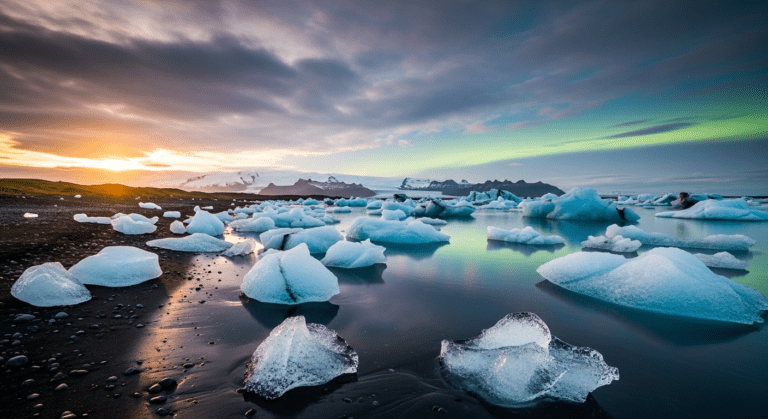
- Jökulsárlón Glacier Lagoon: Icebergs and reflections
- Gullfoss Waterfall: Power and spray captured with slow shutter
- Seljalandsfoss: Underwater or behind-the-waterfall shots
- Vík Black Sand Beach: Dramatic coastlines and basalt stacks
- Dettifoss: Europe’s most powerful waterfall
Research these locations ahead of time, and plan your visits to catch the best light and minimal crowds.
Editing and Post-Processing Tips
Post-processing can elevate your images:
- Adjust exposure and contrast to bring out details.
- Enhance colors without overdoing it—aim for natural tones.
- Crop for better composition and clarity.
- Use HDR techniques for scenes with high dynamic range, like waterfalls and mountain views.
Tools like Adobe Lightroom or Capture One offer professional controls suitable for mobile and desktop editing.
Safety and Ethical Photography in Iceland
Respect nature and local regulations:
- Stay on marked trails to avoid damaging delicate ecosystems.
- Never disturb wildlife or natural features.
- Be cautious of weather—cold, wind, and rain can be hazardous.
- Respect private property and ask for permission when shooting on private land.
FAQs about Travel Photography in Iceland
Q1: What is the best camera for travel photography in Iceland?
A: A mirrorless or DSLR camera with versatility, good low-light performance, and interchangeable lenses is ideal. Compact options with manual controls can also suffice for casual photographers.
Q2: When is the best time to visit Iceland for photography?
A: Late spring (May–June) and early autumn (September–October) offer optimal weather and light conditions, with less crowding. Winter (December–February) is perfect for snow and auroras.
Q3: How can I protect my gear from Iceland’s weather?
A: Use weatherproof camera bags, lens covers, and always carry microfiber cloths. Avoid changing lenses in harsh conditions to prevent dust and moisture from entering your camera.
Q4: Are drone flights allowed in Iceland?
A: Yes, but with restrictions. Always check local regulations, avoid protected areas, and obtain necessary permissions to fly drones legally and responsibly.
Q5: What post-processing tips do you recommend for Iceland photos?
A: Focus on enhancing natural colors, correcting exposure, and sharpening details. Avoid over-saturation to maintain realism.
Conclusion: Capture Iceland’s Magic Through Your Lens
Planning your Iceland trip with a focus on travel photography ensures you’ll preserve memories in the most stunning way. Equip yourself with the right gear, master key techniques, and respect nature’s power. By doing so, you’ll create breathtaking images that showcase Iceland’s rugged beauty and otherworldly landscapes.
Remember, the secret to great travel photos isn’t just equipment, but patience, preparation, and a keen eye for light and composition.
For more detailed tips on travel photography gear and techniques, check out our travel photography tips. Safe travels and happy shooting!




0 Comments