



How to Effectively Implement AI Tools in Your Business for Maximum ROI
In today’s digital landscape, leveraging AI tools has become essential for businesses aiming to stay competitive and innovate rapidly. Whether you’re a small startup or a large enterprise, understanding how to implement AI effectively can significantly boost productivity, reduce costs, and enhance customer experiences. This comprehensive guide walks you through practical steps to integrate AI tools seamlessly into your business operations for maximum return on investment (ROI).
Understanding the Value of AI Tools in Business
AI tools, like AI-powered software, offer automation, data analysis, and customer engagement capabilities that traditional methods can’t match. Proper implementation can lead to outcomes such as:
- Faster decision-making processes
- Enhanced personalization of marketing strategies
- Operational cost savings
- Improved customer satisfaction
However, the key is not just adopting AI but doing so thoughtfully to ensure tangible ROI.
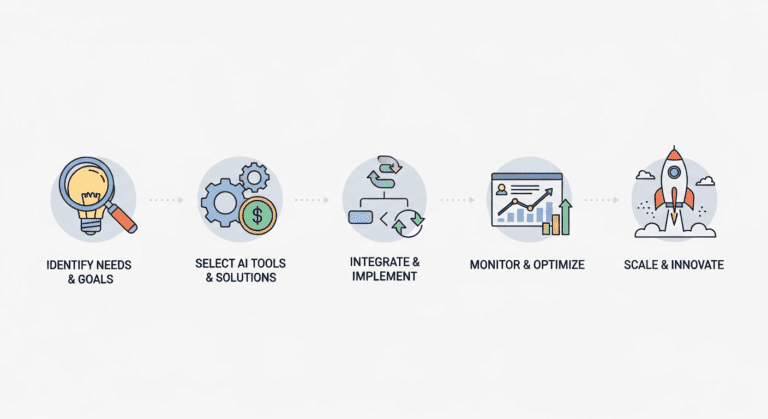
Step 1: Assess Your Business Needs and Goals
Identify Critical Pain Points
Begin by analyzing your current workflows to find bottlenecks or repetitive tasks that can benefit from automation. For example, if your sales team spends excessive time on manual data entry, AI-powered CRM tools can drastically improve efficiency.
Define Clear Objectives
Set specific goals, such as increasing lead conversions by 20%, reducing operational costs by 15%, or enhancing customer support response times. Clear objectives help guide the selection of suitable AI tools and measure success.
Step 2: Choose the Right AI Tools
Evaluate Different AI Technologies
Consider offerings like chatbots, predictive analytics, and automated marketing platforms. Prioritize tools that align with your business goals and integrate smoothly with existing software.
Consider Costs and Scalability
Opt for AI solutions that fit your budget but also allow room for growth. Cloud-based AI services often provide flexibility, enabling you to scale up as your needs evolve.
Step 3: Prepare Data for AI Integration
Gather Quality Data
AI algorithms thrive on high-quality data. Clean, organized, and relevant data ensures accurate outputs and reliable insights. Common sources include CRM systems, transaction logs, and customer feedback.
Ensure Data Privacy and Compliance
Adhere to data protection regulations like GDPR or CCPA. Transparency with your customers about data use builds trust.
Step 4: Implementation and Integration
Start Small with Pilot Projects
Test AI tools on a limited scale before full deployment. For example, run a chatbot pilot on your website to gauge customer interactions and gather feedback.
Integrate Seamlessly with Existing Systems
Work with IT specialists or AI vendors to ensure smooth integration. Proper API connections and data flow are critical to avoid disruptions.
Avoid Common Pitfalls
- Ignoring employee training
- Overcomplicating AI solutions
- Neglecting ongoing monitoring and updates
Step 5: Monitor Performance and Optimize
Use analytics dashboards to track KPIs aligned with your objectives.
- ROI metrics such as cost reduction, revenue growth, or customer retention
- Operational efficiency improvements
- Customer engagement levels
Regularly review data, gather feedback, and refine your AI systems for better performance.
Expert Tips for Successful AI Deployment
- Invest in employee training: Ensure your team understands AI tools for better adoption.
- Prioritize transparency: Communicate AI capabilities and limitations to users and stakeholders.
- Stay updated: AI technology evolves rapidly. Keep abreast of latest trends and updates.
Case Study: Boosting Customer Service Efficiency
One retail company integrated an AI-powered chatbot that handled 60% of customer inquiries, freeing agents for more complex issues. This resulted in a 30% reduction in response times and a significant boost in customer satisfaction scores.
Conclusion: Maximize ROI with Thoughtful AI Integration
Implementing AI tools effectively requires strategic planning, clear goals, and continuous optimization. By assessing your needs, choosing the right solutions, preparing your data, and monitoring results, your business can unlock the full potential of AI. Embrace technology thoughtfully to stay ahead in a competitive marketplace and achieve long-term success.
FAQs
1. What are the first steps to integrate AI into my business?
Start by assessing your business needs and defining clear goals. Then, evaluate AI tools suitable for your industry and workflows.
2. How do I select the best AI tool for my company’s needs?
Consider your specific use case, budget, scalability, and how well the tool integrates with existing systems. Pilot testing is also recommended.
3. What are the biggest challenges of AI implementation?
Common challenges include data quality issues, high initial costs, lack of employee expertise, and managing change within the organization.
4. How can I measure AI ROI effectively?
Track relevant KPIs such as cost savings, revenue increases, improved customer satisfaction, and operational efficiencies over time.
5. Are there ethical concerns with AI deployment?
Yes, including data privacy, bias, and transparency. Ensure compliance with regulations and implement fair, transparent AI practices.
For more insights on leveraging AI in your business, visit NefeBlog’s AI category.




0 Comments