



Top 10 Effective Posture Correction Exercises for Adults in Luxembourg
In today’s sedentary lifestyle, poor posture has become a widespread issue among adults, often leading to back pain, neck strain, and long-term musculoskeletal problems. If you’re seeking to improve your posture, especially if you spend long hours at a desk or screen, incorporating targeted exercises is essential. This comprehensive guide provides actionable posture correction exercises tailored for adults in Luxembourg, helping you stand taller, alleviate pain, and prevent future discomfort.
Understanding the Importance of Proper Posture
Good posture is crucial for maintaining spinal alignment, reducing muscle strain, and improving overall health. Poor posture can lead to chronic pain, decreased mobility, and even impact mental well-being. For adults in Luxembourg, where busy lifestyles often involve prolonged sitting, addressing posture issues proactively is vital for long-term health benefits.
Common Causes of Poor Posture in Adults
- Extended periods of sitting at desks or computers
- Lack of physical activity
- Improper ergonomics at workstations
- Poor sleeping positions
- Stress and muscle tension
Top 10 Posture Correction Exercises for Adults
Implementing these exercises regularly can significantly improve your posture by strengthening key muscle groups and increasing flexibility.
1. Chest Opening Stretch
This stretch counteracts rounded shoulders caused by forward hunching. Stand or kneel, clasp your hands behind your back, and gently lift your arms while opening your chest. Hold for 20–30 seconds. Repeating this daily helps improve shoulder alignment.
2. Cat-Cow Pose
Enhances spinal flexibility and relieves tension. Begin on all fours, alternate between arching your back (cow) and rounding it (cat). Perform 10 repetitions slowly to mobilize the spine.
3. Wall Angels
Stand with your back flat against a wall, arms raised to a 90-degree angle. Slowly lift and lower your arms like making a snow angel, maintaining contact with the wall. Do 2 sets of 15 reps to strengthen shoulder stabilizers.
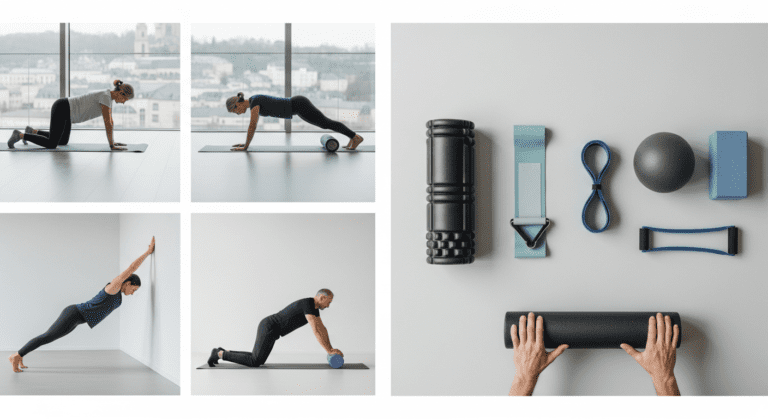
4. Serratus Anterior Wall Push
Improve scapular stability. Stand facing a wall, place hands on the wall at shoulder height, and push forward, feeling the engagement in your upper back muscles. Complete 3 sets of 12.
5. Bird Dog Exercise
This core stabilizer helps correct pelvic tilt. On hands and knees, extend opposite arm and leg, hold for 5 seconds, then switch sides. Do 10 reps per side.
6. Hip Flexor Stretch
Tight hip flexors contribute to anterior pelvic tilt. Kneel on one knee, push hips forward, and hold for 30 seconds each leg. Incorporate daily stretching for best results.
7. Plank
Strengthens the core, supporting better posture. Maintain a straight line from head to heels for 30–60 seconds. Repeat 3 times.
8. Glute Bridges
Enhance glute strength, crucial for pelvic alignment. Lie on your back with knees bent, lift hips up, squeeze glutes, hold for 3 seconds, then lower. Perform 15 reps for 3 sets.
9. Seated Spinal Twist
Relieves tension in the back and improves spinal mobility. Sit on a chair or mat, twist your torso to one side, hold for 20 seconds, then switch sides.
10. Neck Retractions
Counteracts forward head posture. Sit or stand, gently pull your chin back, creating a double chin, hold for 5 seconds, then release. Do 10 repetitions daily.
Implementing a Posture Correction Routine
Consistency is key. Aim to perform these exercises at least 5 days a week, preferably morning or evening. Combining stretching with strengthening ensures balanced muscle development.
Ergonomics and Lifestyle Tips for Posture Improvement
- Workstation setup: Use an adjustable chair, keep your monitor at eye level, and maintain feet flat on the floor.
- Breaks: Take short breaks every 30–45 minutes to stretch and move.
- Sleep habits: Use a supportive pillow and avoid sleeping on your stomach.
- Mindfulness: Be aware of your posture throughout the day and make adjustments as needed.
Tools and Resources
Consider using ergonomic tools like lumbar supports or posture correctors during work hours for added support.
Conclusion and Summary
Addressing poor posture is essential for adults seeking long-term musculoskeletal health. Incorporate these 10 posture correction exercises into your daily routine, optimize your workspace ergonomics, and stay mindful of your posture. Consistency yields results — healthier posture leads to less pain, better mobility, and improved quality of life in Luxembourg and beyond.
Frequently Asked Questions (FAQs)
1. How long does it take to see results from posture exercises?
Most people notice improvement within 4–6 weeks of regular practice, with optimal results after 3 months.
2. Can poor posture cause long-term health problems?
Yes, chronic poor posture can lead to persistent pain, herniated discs, and even breathing issues if left uncorrected.
3. Are there any posture correction exercises suitable for seniors?
Gentle stretches like neck retractions and seated spinal twists are safe and effective for seniors, but consult a healthcare provider first.
4. Can I do these exercises if I have existing back pain?
Most exercises are safe, but consult a physiotherapist for personalized guidance and modifications.
5. How often should I revisit my ergonomics?
Reassess your workspace every 6–12 months or if you experience discomfort, to ensure optimal ergonomic support.
Additional Resources
For more detailed guidance, check out this article on neck pain prevention and consider consulting a physiotherapist experienced in ergonomic training.




0 Comments