


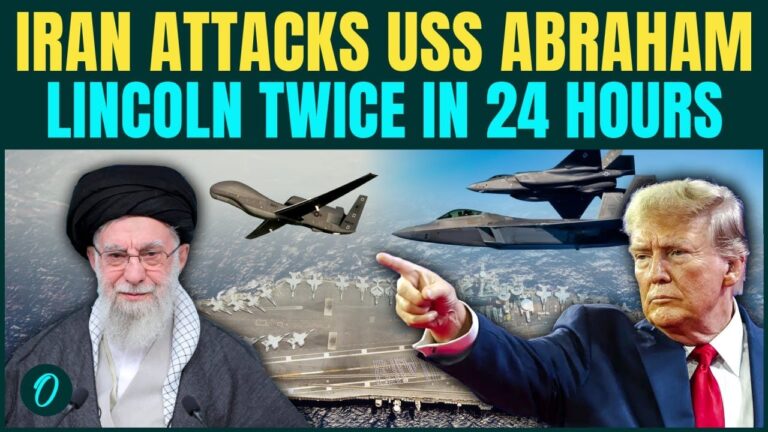

U.S. F-35C Shoots Down Iranian Drone Near USS Abraham Lincoln: Key Facts & Implications
On February 3, 2026, an intense encounter unfolded in the Arabian Sea as a U.S. F-35C fighter jet from the USS Abraham Lincoln shot down an Iranian Shahed-129/139 surveillance drone that dangerously approached the carrier strike group. This incident highlights escalating tensions between the United States and Iran in a critical geopolitical region. The event, coupled with Iranian harassment of U.S. assets in the Strait of Hormuz, signals a significant moment in Middle Eastern security and U.S. military strategy. Understanding the details, context, and potential consequences is essential for policymakers, defense enthusiasts, and global security followers.
What Happened on February 3, 2026
The Incident Overview
Earlier this week, the USS Abraham Lincoln’s carrier strike group, comprising three destroyers and the aircraft carrier itself, was operating approximately 500 miles off Iran’s coast in the Arabian Sea. During this operation, a long-range Iranian Shahed-129/139 drone, capable of reconnaissance and strike functions with over 100 pounds of explosives, aggressively approached the U.S. fleet. In response, a U.S. Marine F-35C from Marine Fighter Attack Squadron-314 (Black Knights) intercepted and shot down the drone.
Follow-up Iranian Provocations
Hours later, Iranian IRGC fast boats and a Mohajer reconnaissance drone, which can carry munitions, engaged in harassment near the Strait of Hormuz. They threatened to seize the U.S.-flagged tanker M/V Stena Imperative, which had previously provided refueling support to U.S. naval vessels. These provocative acts prompted a defensive escort by the USS McFaul destroyer, with U.S. Air Force support, successfully de-escalating tension without casualties or damage.
Key Participants and Their Roles
- U.S. Assets: USS Abraham Lincoln carrier strike group, F-35C aircraft, USS McFaul destroyer, U.S. Central Command (CENTCOM) spokespeople.
- Iranian Assets: Shahed-129/139 reconnaissance/strike drone, IRGC fast boats, Mohajer surveillance drone.
- Tanker: M/V Stena Imperative, flagged in the U.S., crucial in regional oil transportation and previously involved in U.S. Navy resupply missions.
Official Statements and Strategic Context
The United States Central Command (CENTCOM) issued a warning against Iranian harassment and aggressive actions. CENTCOM spokesperson Capt. Tim Hawkins emphasized that such confrontations threaten regional stability. Meanwhile, the White House confirmed ongoing diplomatic talks with Iran, despite escalating provocations. White House Press Secretary Karoline Leavitt indicated that discussions on Iran’s nuclear program and protest suppression are proceeding, amidst Trump-era threats of military action.
Why Is This Incident Important?
Escalation in U.S.-Iran Tensions
This event signals a possible shift toward increased hostility in the already tense Middle East, especially around strategic chokepoints like the Strait of Hormuz. Iran’s use of long-range drones and harassment tactics resembles incidents from 2019, but with higher technological sophistication and escalation potential in 2026.
Impact on Global Oil Security
The Strait of Hormuz is a vital global oil transit route. Increased Iranian provocations raise fears of disruption, which could impact oil prices worldwide. The U.S. response aims to deter further Iranian aggression without provoking broader conflict.
Testing U.S. Military Responses
Iran’s provocations may be a strategic move to gauge U.S. resolve, especially while diplomatic talks continue. This situation acts as a litmus test for U.S. military readiness and Iran’s willingness to escalate further.
What Are the Risks and Opportunities?
Risks
- Potential for miscalculation leading to broader conflict
- Disruption of international shipping and energy markets
- Further Iranian provocations, including more aggressive drone or missile attacks
Opportunities
- Demonstration of U.S. military strength and deterrence capabilities
- Maintaining diplomatic channels and de-escalation prospects
- Reinforcing international support for freedom of navigation in key waterways
Comparing 2019 and 2026 Iran-U.S. Incidents
| Aspect | 2019 Incidents | 2026 Incidents |
|---|---|---|
| Type of Provocation | Drone and small boat harassment | Long-range drone shootdown & fast boat threats |
| Medium Used | Shahed drones, small boats | Shahed-129/139 drone, Mohajer drone |
| U.S. Response | Limited intercepts, diplomatic protests | F-35C shootdown, escort, and de-escalation |
| Implications | Regional tension flared, but contained | Possible escalation or deterrence signaling |
What Might Happen Next?
- Further Iranian attempts at drone or missile harassment
- Diplomatic efforts with potential U.S.-Iran negotiations
- Increased U.S. naval deployments or patrols in the region
- Possible escalation to limited military strikes if provocations continue
FAQs About Iran-Related U.S. Naval Incidents
1. What is the significance of the U.S. shooting down an Iranian drone?
This marks the first known instance of an F-35C shooting down an Iranian drone in open conflict, illustrating increased U.S. military readiness and Iran’s evolving tactics in regional provocations.
2. Could this lead to a larger conflict in the Middle East?
While tensions are high, current events suggest a cautious U.S. approach aimed at deterrence. However, continued provocations could escalate if diplomatic solutions fail.
3. How does Iran justify its drone operations near U.S. ships?
Iran claims its drones gather intelligence and conduct surveillance, viewing such operations as part of its regional strategic defense and deterrence measures.
4. What are the implications for global oil markets?
Increased instability in the Strait of Hormuz could disrupt oil shipments, potentially causing spikes in global oil prices and affecting economies worldwide.
5. What should U.S. allies in the region do in response?
Allies are advised to maintain a vigilant naval presence, bolster regional partnerships, and support diplomatic efforts to prevent further escalation.
Conclusion
The February 3, 2026, incident underscores the fragile state of U.S.-Iran relations and the strategic importance of the Middle East. The successful shotdown of an Iranian drone by an F-35C demonstrates U.S. military strength but also raises concerns about escalation in a vital region for global energy security. While diplomatic talks continue, the risk of further provocations remains, requiring careful monitoring and proactive diplomacy. Stakeholders — from policymakers to defense analysts — must navigate this complex landscape to prevent a broader conflict and ensure stability in international shipping routes.
For more insights into regional security and military developments, visit Understanding War’s Iran update or Defense Scoop’s analysis.




0 Comments