


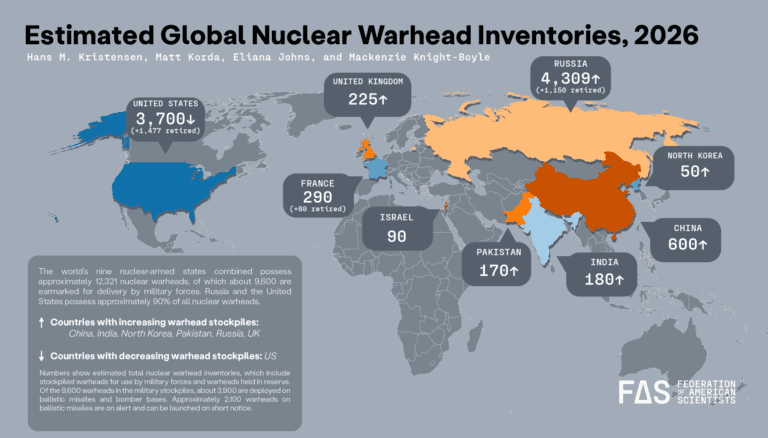

Global Nuclear Arms Race 2026: The Rising Threat and What It Means for International Security
The year 2026 marks a pivotal moment in international security as the world faces an emerging global nuclear arms race. Driven by the collapse of key arms control treaties, rapid technological advancements, and increasingly aggressive nuclear postures from major powers, the risk of a catastrophic conflict has escalated significantly. Understanding the factors behind this trend, the key players involved, and what it means for future stability is crucial for policymakers, defense analysts, and global security enthusiasts alike.
Why is the 2026 Nuclear Arms Race Such a Critical Issue?
Published amid the expiration of the New START treaty in February 2026, the article highlights the rapid deterioration of arms control efforts and rising tensions among nuclear-armed states. This situation fuels fears of a new, uncontrollable nuclear arms race, reminiscent of the Cold War era but far more complex and dangerous due to technological proliferation and multiple state actors.
The Collapse of Key Arms Control Agreements
End of the New START Treaty
The New START treaty, signed in 2010, was the last major bilateral arms control agreement between the US and Russia. Russia suspended it in February 2023, citing Western provocations and strategic disagreements. Subsequently, the US halted inspections in 2024, and with the treaty set to expire in February 2026, there is currently no replacement or new framework in sight.
- Without New START, there is no formal limit on the number of deployed nuclear warheads.
- The loss of verification mechanisms increases the risk of miscalculations and misunderstandings.
Rapid Modernization and Expansion of Nuclear Arsenals
Major Powers and Their Nuclear Developments
Major nuclear nations are intensifying their efforts to modernize and expand their arsenals:
- Russia: Modernizing to deploy over 7,000+ warheads, along with deploying hypersonic missiles like Avangard and new fractional orbital bombardment systems tested in 2024 (e.g., Cosmos-2553).
- China: Expanding its nuclear stockpile from approximately 500 warheads in 2024 to an estimated 1,500 by 2035, with significant silo and missile constructions under Xi Jinping’s leadership.
- United States: Planning advanced systems like the Sentinel ICBMs (expected operational in the 2030s, with an $140 billion budget), Columbia-class submarines, and B-21 bombers to maintain strategic parity.
Proliferation Beyond the Big Powers
North Korea and Iran
Other regional actors are also advancing their nuclear ambitions:
- North Korea: Possesses over 50 warheads, aiming to double that number to over 100 by 2030.
- Iran: Nears breakout capability, with enough enriched uranium for 5 nuclear bombs, raising fears of regional proliferation and escalation.
These developments contribute to a destabilized multipolar nuclear landscape, increasing the probability of accidents or deliberate conflicts.
Advanced Technologies Accelerating the Threat
Hypersonic Missiles and AI-Driven Systems
New technologies significantly complicate nuclear deterrence:
- Hypersonic missiles like Russia’s Avangard and China’s DF-27 can evade traditional missile defenses, reducing the warning time and increasing the risk of pre-emptive strikes.
- AI and fractional orbital bombardment systems—such as Russia’s Cosmos-2553 test in 2024—introduce new vulnerabilities, potential false alarms, and escalation pathways.
The Urgency for International Action
The convergence of treaty collapse, modernization races, proliferation risks, and technological advances presents a dire challenge. The absence of diplomatic frameworks and verification agreements increases the likelihood of miscalculations that could trigger nuclear conflict.
Experts warn that unless there is immediate renewed engagement in arms control efforts, the world could see thousands of new warheads by the 2030s, escalating the threat of global catastrophe.
FAQs: Understanding the Nuclear Arms Race in 2026
What caused the collapse of the New START treaty?
Russia suspended the treaty in 2023, citing Western provocations, followed by the US halting inspections in 2024. The geopolitical tensions and strategic disagreements eroded the treaty’s effectiveness, leading to its expiration in 2026 without renewal.
How are hypersonic missiles changing nuclear deterrence?
Hypersonic missiles can evade current missile defenses due to their speed and maneuverability. This technological leap undermines traditional deterrence models, increasing the risk of preemptive strikes and accidental escalation.
Is a new arms race inevitable?
Without renewed diplomatic efforts, verification agreements, and arms control treaties, the risk of an uncontrollable nuclear arms race rises sharply. Policymakers must prioritize international cooperation to avoid this dangerous trajectory.
What are the risks of nuclear proliferation in Asia and the Middle East?
Regional powers like North Korea and Iran already possess or seek nuclear capabilities, which can destabilize regional security and prompt other countries to develop their own arsenals, further fueling the global arms race.
What steps can be taken to curb this escalating threat?
Reviving and expanding treaties like New START, establishing new arms control frameworks, implementing verification systems, and engaging in multilateral diplomacy are essential. Investing in crisis-warning systems and nuclear security measures are also vital.
Conclusion: Time to Prevent a Nuclear Catastrophe
The unfolding global nuclear arms race in 2026 signals a profound shift away from Cold War-era stability toward a more precarious multipolar world. The erosion of treaties, modernization of arsenals, proliferation concerns, and advancing technologies all point to increased risks of miscalculation or accidental conflict.
It is imperative for international actors to prioritize renewed arms control, verification, and diplomacy to prevent a future where thousands of new warheads could threaten humanity’s very survival. Act now—before this dangerous race spirals beyond control.
Additional Resources
- Details about the New START treaty
- Latest nuclear forces estimates
- Nuclear weapons and global security overview
- US State Department on New START
Staying informed and engaged is crucial. For deeper insights into international security and strategies to navigate this complex landscape, explore our related articles:
- Effective international diplomacy strategies
- Building resilient global alliances
- Managing complex international crises




0 Comments