


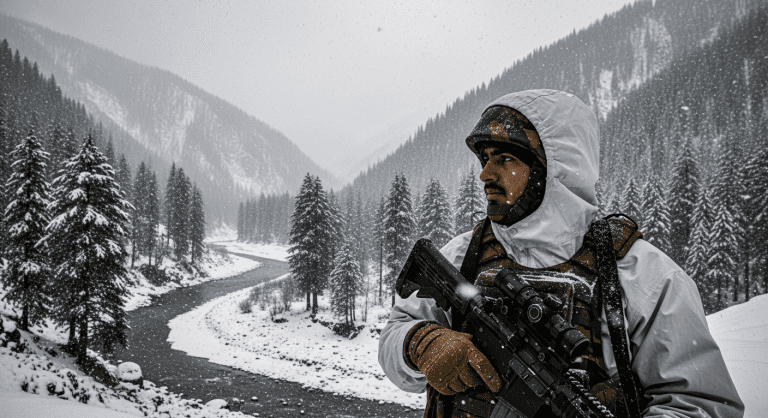

Jammu Kashmir Counter-Terror Operations: Inside the Indian Army’s Winter Offensive in Kishtwar and Doda
Jammu Kashmir counter-terror operations have entered a decisive phase as the Indian Army intensifies its crackdown in Kishtwar and Doda during this year’s harsh Chillai Kalan winter. This unprecedented winter push, targeting 30–35 Pakistani terrorists attempting to exploit the snowbound terrain south of the Pir Panjal range, has sparked national interest and drawn the focus of defence analysts, security enthusiasts, and every Indian concerned with the region’s peace and security. In this in-depth guide, we break down tactics, key facts, new technologies, and what sets this winter offensive apart—so you have the latest, most reliable information straight from published sources and first-hand analysis.
Why Are Jammu Kashmir Counter-Terror Operations Trending Now?
Traditionally, winters in Jammu and Kashmir saw decreased security activity. But this year, the Indian Army has upended expectations. The aggressive winter operations are trending due to the Army’s new resolve to eliminate Pakistan-backed terrorists during the tough Chillai Kalan period (December 21 to January 31), when militants typically hide out and regroup in remote, snow-covered ridgelines. This strategic shift has drawn attention from national media and global security forums, underlining its importance for India’s defense posture and regional stability. For the latest updates, read the full reports from NDTV and Economic Times.
Key Details: When, Where, and Who Is Involved?
- Timeline: Chillai Kalan, the coldest and harshest winter period (Dec 21–Jan 31), sees the most intense counter-insurgency push in years.
- Locations: Focus on Kishtwar and Doda districts, especially remote, high-altitude ridges near the Pir Panjal.
- Adversaries: Approximately 30–35 Pakistani terrorists are the main targets, believed to be hiding in these mountain zones.
- Forces Deployed: The Indian Army, Jammu and Kashmir Police, CRPF, Special Operations Group (SOG), civil administration, forest guards, and Village Defence Guards, all working in joint operations.
- Intelligence: Clear, actionable inputs from multiple agencies enable rapid, cross-verified action.
- No specific individual names released; sources confirm a “zero tolerance” approach post-Operation Synindhur. The mission aims for year-round counter-terror momentum.
New Tactics: How Is the Indian Army Conducting Winter Counter-Terror Operations?
1. Specialized Winter Warfare Teams
Winter warfare units have been deployed, fully trained for high-altitude snow combat. These teams are equipped with gear for severe cold, avalanche rescue, and long-range patrolling—ensuring capability in areas that even locals might abandon during Chillai Kalan.
2. Advanced Technology: Drones, Sensors, and Heat-Signature Surveillance
The Army has introduced drones and heat sensors to enhance real-time monitoring. Drones sweep ridgelines and dense forests, while thermal imaging detects human movement in snow. This drastically reduces terrorist hiding chances and improves strike precision.
3. The “Surveillance-Swift Ops-Surveillance” Doctrine
Instead of the older “wait and watch” winter model, the Army now applies a “Surveillance–Swift Ops–Surveillance” approach: constant real-time tracking, rapid reaction teams striking identified targets, and immediate resumption of surveillance to prevent escapes or regrouping.
4. Joint Multi-Agency Mobilization: Army, Police, Civil Stakeholders
All agencies now work seamlessly together:
- Shared actionable intelligence—reduces false alarms, enhances target focus.
- Quick civilian-military coordination—forest staff and Village Defence Guards report suspicious movements, leading to faster responses.
5. Temporary Bases and High-Altitude Posts
The Army is establishing temporary camps at often inaccessible points, denying terrorists safe haven, supply lines, and logistical support. This denies militants winter mobility and sustenance—forcing them into risky exposure or surrender.
What’s Different: How 2024’s Winter Ops Break the Mold
- No winter slowdowns: Operations don’t pause, denying militants their usual respite.
- Proactive intelligence-driven strikes: Inputs are acted on swiftly, preventing planning and regrouping.
- Technology-first: Use of drones and sensors in deep snow is a game-changer.
- Reduced local militant support: With improved security, terrorists are cut off from logistics.
- Multi-agency synergy: Civil, paramilitary, and police work as one for better efficiency.
Security Impact: National and Regional Significance
- National security boost: Denying winter safe havens avoids summer surges in violence. Local populations feel more secure year-round.
- Strategic message to adversaries: India is demonstrating no seasonal gaps in will or capability, deterring cross-border designs.
- Military innovation: Chillai Kalan operations set precedent for Arctic and high-mountain counter-insurgency tactics worldwide.
- United defence spirit: Involvement of local guards and civil staff increases public trust and information flow.
Emotional Angle: Pride and Resolve in Sub-Zero Conditions
The zero-tolerance winter crackdown evokes national pride—highlighting the commitment, courage, and readiness of Indian soldiers in facing Chillai Kalan’s biting cold. For the men and women on the frontlines, winter’s freeze is no shield for terrorism. Their determination ensures threats are eliminated before they can reach villages or urban areas, reinforcing India’s resolve to safeguard every citizen. Watch detailed coverage at this YouTube report.
Key Takeaways for Defence Enthusiasts and J&K Residents
- Chillai Kalan no longer means a lull—security is active year-round across Jammu and Kashmir.
- Technology, coordination, and local cooperation are key; drones and sensors play a pivotal role in surveillance and precision.
- Temporary bases and winter-specific tactics deny Pakistan-backed groups their lifeline.
- Multi-agency approach ensures the security apparatus is robust and responsive in all weather.
- Public-transparent and inclusive strategy has led to greater support from J&K’s own communities, fostering trust and security.
- Read more about India’s security initiatives and related local developments in pieces like Delhi PWD’s South Delhi Flyover Drainage Upgrades and Vijay Hazare Trophy news.
FAQ: Jammu Kashmir Counter-Terror Operations
What is Chillai Kalan and why is it important for security?
Chillai Kalan marks the coldest winter period in Jammu and Kashmir (December 21–January 31). Traditionally, security operations slowed as militants exploited harsh conditions to hide out and regroup. However, this year’s proactive military push aims to eliminate these safe havens for terrorists—setting a new benchmark for regional counter-insurgency.
How does the Indian Army track terrorists during winter?
Forces use drones, thermal sensors, and real-time surveillance technologies for 24×7 monitoring in snow-covered areas. Combined with on-ground patrols and actionable intelligence from multiple agencies, this high-tech approach drastically reduces the spaces available to hide.
What agencies are involved in the current counter-terror operations?
The operations are joint efforts involving the Indian Army, Jammu and Kashmir Police, CRPF, Special Operations Group (SOG), civil administration, forest guards, as well as Village Defence Guards—a model for integrated internal security.
How does this winter’s security push differ from previous years?
Instead of limiting activities in winter, the current doctrine is proactive, technology-driven, and relentless. Temporary bases have been set up in remote areas, and intelligence is acted upon without delay to prevent militant regrouping or movement.
Why is denied local support crucial in these operations?
Cut-off supply lines weaken terrorists’ ability to survive or operate in rugged terrain. With reduced local support, militants lose access to food, shelter, and information—forcing them into exposure or retreat and reducing threat levels to local communities.
Conclusion
The Jammu Kashmir counter-terror operations of 2024 stand out as a transformative campaign—blending cutting-edge tech, bold strategy, and seamless multi-agency coordination in the sub-zero expanse of Chillai Kalan. With soldiers braving the winter’s worst to keep the nation safe, these operations demonstrate India’s commitment to countering terrorism in all seasons and terrains. For continued updates, check Economic Times Defence News and related real-time coverage.
- Creative conversation strategies
- Building confidence for any challenge
- Expert relationship tips
- Security and investigative news
As India’s counter-terror apparatus evolves, its winter offensive in Jammu and Kashmir signals a new era of round-the-clock, year-round security. Resolve, resilience, and readiness stand tall against the harshest elements—ensuring the safety of Jammu, Kashmir, and every citizen of the nation.




0 Comments