



Essential Sleep Hacks for Young Adults in Australia: How to Improve Your Rest Naturally
Sleep is the foundation of good health, especially for young adults juggling studies, careers, and social life in Australia. Yet, many struggle with restless nights, early mornings, and fatigue. If you’re seeking effective, natural ways to enhance your sleep quality, this guide offers proven hacks backed by science. Read on to learn how you can wake up refreshed, energized, and ready to conquer your day.
Understanding the Importance of Quality Sleep for Young Adults
For Australians aged 17-30, sleep deprivation impacts cognitive function, mood, immune health, and overall performance. With increasing screen time and busy schedules, establishing a good sleep routine becomes essential. Proper rest not only boosts productivity but also supports long-term health and longevity.
Primary Factors Affecting Sleep in Young Adults in Australia
- Digital Overload: Excess screen time before bed disrupts melatonin production.
- Stress & Anxiety: Academic, work, or social pressures disturb sleep cycles.
- Irregular Schedule: Unpredictable sleep times due to lifestyle choices.
- Environmental Light & Noise: Bright lights and city noise interfere with natural sleep cues.
- Diet & Caffeine: Late caffeine or heavy meals impair sleep onset.
Top Sleep Hacks for Young Adults in Australia
1. Establish a Consistent Sleep Schedule
Going to bed and waking up at the **same time daily** helps regulate your internal clock. Aim to get **7-9 hours** of sleep, even on weekends, to maintain rhythm. Use smartphone alarms or apps like Sleepyti.me to plan your sleep cycles accurately.
2. Create a Sleep-Friendly Environment
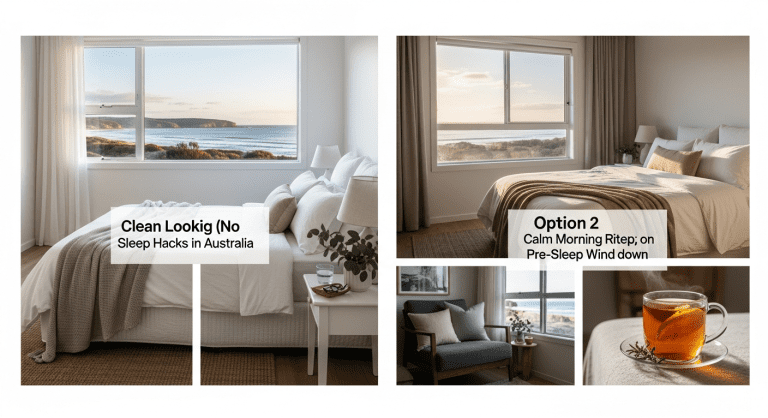
- Keep your bedroom cool (around 18-20°C).
- Use blackout curtains to eliminate light pollution common in Australian cities.
- Invest in noise-canceling headphones or a white noise machine to block out city sounds.
These adjustments signal your body that it’s time to sleep, making it easier to fall asleep faster.
3. Limit Screen Time Before Bed
Reduce exposure to blue light from smartphones, laptops, and TVs at least **1 hour before** sleeping. Use features like Night Shift or Blue Light Filter apps to minimize blue light impact. Engaging in relaxing activities like reading a paper book or listening to calming music helps wind down.
4. Practice Relaxation Techniques
Incorporate methods such as deep breathing, meditation, or progressive muscle relaxation to lower stress levels. Apps like Headspace or Calm offer guided sessions tailored for sleep improvement. Consistent practice reduces anxiety and promotes deeper sleep.
5. Be Mindful of Your Diet & Caffeine Intake
Avoid heavy meals, alcohol, and caffeine at least **4-6 hours** before bedtime. Opt for light snacks like fruit or nuts if hungry. Switching to herbal teas like chamomile or valerian root can help promote sleep without the side effects of medication.
6. Incorporate Natural Light & Daily Exercise
Getting **natural sunlight** in the morning helps regulate your circadian rhythm. Aim for at least 30 minutes of outdoor activity daily, whether walking along Sydney’s coastline or urban parks in Melbourne. Regular exercise improves sleep quality but avoid vigorous activity close to bedtime.
Tools & Resources to Enhance Sleep Quality in Australia
- Sleep tracking apps: Sleep Cycle, Fitbit, or Oura Ring.
- Sleep environment accessories: Blackout curtains, white noise machines.
- Relaxation aids: Guided meditation apps like Meditation Ocean.
Common Sleep Myths Debunked
| Myth | Fact |
|---|---|
| Everyone needs 8 hours of sleep | Individual needs vary; between 7-9 hours is typical for young adults. |
| Caffeine doesn’t affect sleep if consumed early | It can disrupt sleep patterns even if consumed in the morning for some people. |
| Nighttime awakenings ruin sleep | Brief awakenings are normal; what matters is total sleep quality. |
FAQs
1. How can I fall asleep faster naturally?
Use relaxation techniques, keep a consistent schedule, and create a calming sleep environment.
2. Is napping during the day good or bad?
Short naps (20–30 minutes) can boost alertness without interfering with nighttime sleep.
3. What are the best natural supplements for sleep in Australia?
Herbal teas like chamomile, valerian root, and melatonin supplements (consult a healthcare professional first).
4. How does blue light affect sleep, and how can I counter it?
Blue light suppresses melatonin, making it harder to fall asleep. Use blue light filters or glasses after sunset.
5. How long does it take to notice sleep improvements?
Most people see changes within **1-2 weeks** of adopting better sleep habits.
Conclusion & Actionable Takeaways
Improving sleep isn’t about drastic changes but consistent habits. Set a regular sleep schedule, optimize your environment, reduce screen exposure, and incorporate relaxation methods. These hacks are simple, natural, and tailored to young adults in Australia to boost your overall health and productivity.
Start today by adjusting your evening routine—your body and mind will thank you. For more detailed strategies, check out our brain health tips or explore natural sleep remedies in Australia.
For further insights on wellness tailored for young Australians, visit our related guides or contact a sleep specialist.




0 Comments